 Home

 November 3, 2026
 4 minute read
At a glance
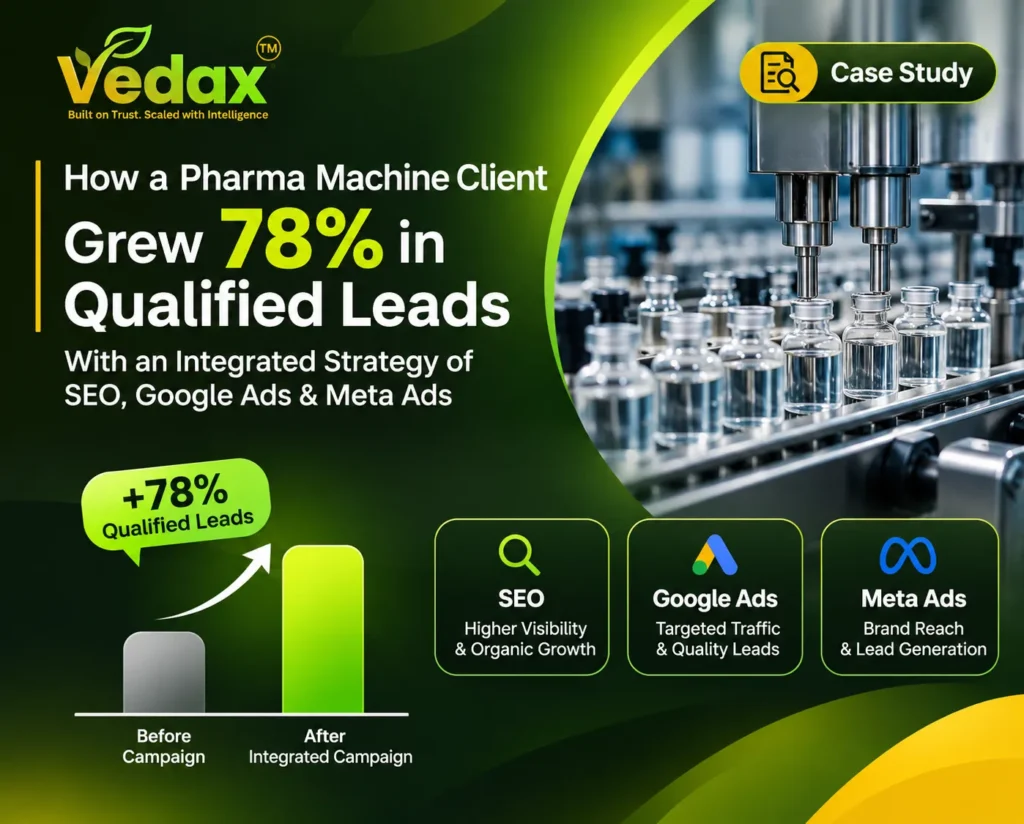
| Client | Pharma Machine |
| Industry | Pharma Sector |
| Location | Baddi |
| Business model | B2B |
| Services we ran | SEO · Google Ads (PPC) · Meta Ads (Facebook and Instagram) · |
| Engagement period | 1 year |
Where Pharma Machinery Client started?
When we took over, the marketing picture looked like this:
- Search: ranking for 10keywords, none in the top 10 for commercial terms
- Google Ads: no campaigns / campaigns running but 78% of leads were unqualified
- Meta Ads: boosted posts only, no structured funnel or tracking
- Tracking:no conversion tracking, so nobody knew which channel produced which lead
- Website: slow on mobile, no clear enquiry path
The real problem was not any single channel. Each one was working alone; nobody could see the whole funnel, and money was being spent without a way to tell what paid back.
How we framed the strategy?
A buyer meets a business in three moments, and each one needs a different tool:
- They are searching right now. Google Ads captures this demand quickly; SEO captures it for years.
- They are not searching yet. Meta Ads puts the brand in front of the right people before intent forms.
- They visited and left. Retargeting on both platforms brings them back.
We planned the three channels as one system with one set of numbers, rather than three separate monthly reports.
What we did?
1. Fixed measurement first
Before spending more, we set up GA4 events for form fills, calls and WhatsApp clicks], linked Search Console, Google Ads and Meta Pixel / Conversions API, and agreed with the client what counts as a qualified lead: “enquiry with budget and location that sales can follow up”.
Why it matters: Without this, a lower cost per lead can simply mean cheaper, worse leads.
2. SEO: build visibility that keeps paying
- Technical clean-up: fixed crawl and indexing issues, improved mobile speed
- Keyword and page mapping: 30 priority keywords mapped to 36 pages, grouped by buyer intent
- Content: new or rewritten pages and articles answering real buyer questions
- Authority: relevant backlinks / local citations / PR mentions earned, if applicable
- AI search readiness: structured data, short answer-first sections and FAQs so the pages can be quoted by AI Overviews and chat assistants
3. Google Ads: capture buyers who are ready
- Campaign structure by product
- Keyword strategy focused on high-intent terms, with a negative-keyword list built from real search-term reports
- Ad copy and landing pages matched to the search, so the visitor sees what they clicked for
- WhatsApp conversion tracking feeding optimisation
- Weekly search-term reviews to cut wasted spend
4. Meta Ads: create demand and retarget
- Audiences: interest and location-based prospecting, lookalikes from existing customers, retargeting of site visitors
- Creative: 10 ad concepts tested product video, customer proof, offer-led winners scaled, losers paused within 20 days
- Lead capture: Instant Forms and WhatsApp click-to-chat]
- Funnel logic: cold audiences see awareness creative; visitors see proof and offers; enquirers are excluded so budget is not wasted
5. Connected the channels
We used search-term data from Google Ads to decide which pages SEO should build next, and used Meta Ads audience insights to sharpen ad angles and page copy. Retargeting lists from the website fed both platforms.
What we would tell anyone starting this journey?
- Measure before you spend. Agree what a qualified lead is before the first rupee goes out.
- Let paid search bridge the SEO wait. Rankings take months; ads can bring enquiries from week one.
- Use Meta Ads for reach and retargeting, not as a replacement for search. Each platform catches a different kind of buyer.
- Review search terms and creatives weekly. Most wasted budget hides there.
- Judge results on qualified leads and revenue, not clicks.
Frequently asked questions
How long does it take to see results from SEO, Google Ads and Meta Ads together?
- Google and Meta Ads can produce enquiries within the first weeks once tracking and campaigns are live. SEO usually needs several months before rankings and organic leads grow steadily. In this project.
Should a business run SEO and paid ads at the same time?
- Often yes. Ads bring quicker results while SEO builds an asset that keeps producing leads without per-click cost. The right split depends on budget, competition and sales cycle.
Can this approach work for my business?
- The framework of measurement, search intent, demand creation and retargeting applies broadly. The channel mix and budget depend on your market