 Home

 November 17, 2026
 4 minute read
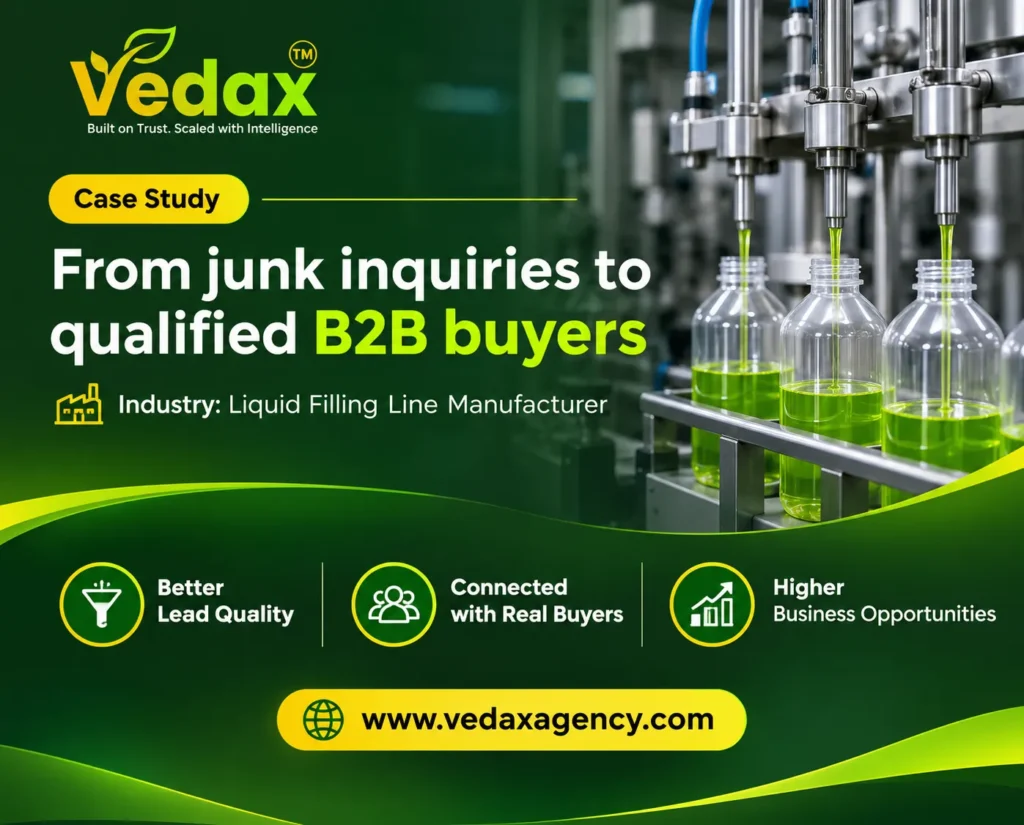
- Client: Manufacturer of automatic liquid filling, capping and labelling lines
- Industry: Industrial packaging machinery · Market: India
- Services: SEO, Google Ads, content marketing, inquiry filtering and tracking
Summary
The client builds liquid filling lines for pharma, food, cosmetics and chemical customers. Their website received traffic, but most inquiries came from price-checkers, students, traders and agents who would never place a machine order. Our job was to make the website attract and identify real buyers: plant heads, procurement managers and project engineers.
The problem
- Generic pages. Products were listed as “liquid filling machine” with little detail on filler type, capacity or application.
- Wrong search audience. Broad keywords brought clicks from people looking for small, cheap or second-hand machines.
- Mixed lead sources. Inquiries from marketplaces, the website and calls landed in different places, so the sales team could not tell which source produced serious buyers.
- Spam and fake inquiries diluted the real ones and wasted follow-up time.
How buyers actually search for this machine?
A filling line is a considered purchase. Buyers compare:
- Filler type: piston, gravity, overflow, peristaltic or servo-driven
- Liquid properties: thin liquids versus viscous products, foaming, or particulates
- Output: bottles per hour and container size range
- Build and compliance: stainless steel grade, GMP expectations, CIP compatibility, and change-over time between products
- Line integration: capping, labelling, conveyor and inspection
So we stopped targeting “filling machine” as a single keyword and built around these decision points.
What we did?
1. Restructured the website around product intent.
- We created separate pages by filler type and application, for example piston fillers for viscous liquids, and bottle filling and capping lines for pharma. Each page covers capacity range, suitable liquids, material of construction, change-over, and who should not buy that model. Saying who a machine is not suited for builds trust with technical buyers.
2. Technical content that answers real buying questions.
- We published guides on choosing a filler type for different viscosities, what to check before buying a filling line, and how output rates are calculated. These pages attract buyers at the research stage and give the sales team something to share.
3. Google Ads on high-intent searches only.
- We targeted commercial, specification-led searches and built a negative keyword list excluding terms such as second-hand, DIY, hand-operated, and student or project queries. This reduced irrelevant clicks and kept spend on people evaluating real machines.
4. Inquiry filtering and tracking.
- We set up form tracking by source and filtered spam and low-quality submissions before they reached the sales team. The form was also reworked to ask for application, liquid type and target output, which pre-qualifies the lead before the first call.
5. Proof content.
- Machine photography and short running-machine videos gave buyers visual confirmation, which matters a lot when the purchase is a capital machine.
What did not work at first?
Our first Google Ads setup used broad match keywords, and clicks came in from small-scale and hobby searches. Cost per click looked fine, but few inquiries were usable. After tightening match types and building the negative keyword list, the quality of inquiries improved. This is a common trap in machinery marketing: cheap clicks are not cheap leads.
What we learned?
- Technical buyers trust specific pages more than broad claims.
- Lead quality is a tracking problem as much as a traffic problem.
- Negative keywords are as valuable as positive ones in industrial B2B.
FAQs
How long does SEO take for an industrial machinery website?
- Indexing and first ranking movements usually appear within a few months, while consistent inquiry growth takes longer because buyers research for weeks before contacting suppliers.
Is IndiaMART enough for a machinery manufacturer?
- Marketplaces bring volume, but quality varies. A strong website and search presence brings inquiries from buyers who already know what they need.
What content works best for industrial machines?
- Specific, technical pages with specifications, use cases and real photos or video, written the way an application engineer would explain them.
Can you tell which channel produced a serious inquiry?
- Yes. With source tagging on forms and a lead sheet, every inquiry can be traced back to its channel.
Does Vedax Agency work with manufacturers outside Gujarat?
- Yes. We work with manufacturers across India.
Want similar results for your plant? Contact Vedax Agency